After doing 2 separate tests on 2 of my better long lenses, Tokina AT-X 80-200mm f/2.8 and Pentax SMC 200mm f/2.5 I decided to put them against each other at 200mm to figure out which one is better. As I expected Tokina is much softer wide open. Pentax is sharp even wide open., which is probably the best thing about this lens. The problem with the Pentax thought is that there is a lot of chromatic aberration, which is visible even at f/5.6, but finally disappears at f/8. The Tokina on other hand deals with the chromatic aberration much better and what’s more important even at f/4 it matches the sharpness of Pentax. At f/4 Tokina actually achieves more pleasant image than much more expensive Pentax. At f/8 both lenses look pretty much identical, but since these are suppose to be fast lenses, that is a bit irrelevant. Pentax is probably more usable at f/2.8, but from f/4 I choose Tokina as the winner. F/4 is fine for me, I don’t need the lens to be completely wide open, so I’m glad I kept the Tokina and sold the Pentax. Tokina much cheaper than Pentax and much more flexible thanks to it’s convenient zoom range. Pentax is still a great lens, but probably a bit overpriced even for a vintage lens. I love great value for money lenses and Tokina is exactly than, so this is the one I highly recommend to anyone. These are my opinions. I would love to hear yours.
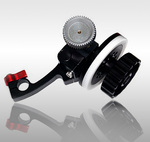
The Filmcity X1 follow focus is currently one of the cheapest FFs you can get on eBay and just about anywhere really. I wanted to see what’s it feels like, so I bought one. I wasn’t expecting it to be the best follow focus in the world, although I always hope that the next follow focus I get will be the one. Well, the X1 is a nice follow focus, one that you would expect to be over £200 just a few years ago. In fact it’s virtually the same as my Camtree Follow Focus, which I bought for over £200 just about 2 years ago. It has the same marking disc, same 360 degree adjustable pointer, similar mounting system (probably both were made by the same manufacturer). While I still prefer my good old Camtree, the X1 offers so much for such a low price. Although the gearbox has some play (similar amount to similarly priced, but simpler RJ and probably less than Fotga DP500, which another really cheap option). The fact that you get the whip and the lens gear on top of all the cool features gives this follow focus the edge over the similarly priced units. Although I decided not to keep mine (I don’t need more than one FF anyway), I do recommend it to people who on a really low budget or/and just buying their first follow focus. If you think, this might not be the one for you, make sure to check out my Follow Focus Buyers Guide for more great value for money options.  Click to view this item on eBay
The Pentax SMC 200mm f/2.5 is quite a unique lens. The most impressive feature that jumps into your eyes straight away is a really fast aperture of f2.5. When you take the lens into your hand, you can tell it a serious one. Large, heavy, built like a tank, great long through smooth focusing ring, this lens is a pleasure to use. However non of this matters if optics can’t deliver. The SMC 200mm definitely delivers nice images; no wonder it’s still popular and quite expensive for a vintage lens. These are going for over £400/$700 on eBay, so not what you would call an absolute bargain. While it’s nice and sharp, is it really worth paying so much over, let’s say a very nicely performing and really cheap Tokina 80-200mm f/2.8 ?
Well, YES and NO, it really depends on what is your priority. Pentax produces really sharp images even wide open and doesn’t really need to be stepped down by a stop like Tokina to get a decent sharpness. Contrast, clarity and colours are also really good. On a downside of course is a higher price, no flexibility of a fast zoom lens. There is also quite a lot of red chromatic aberration in many lighting situations, stepping down the lens helps, but you have to be at f/5.6 to get rid of it almost completely, which is less than perfect. And at the end of the day, how much difference does actually f2.5 makes comparing to f2.8. Well not that much really, it’s only a third of a stop and while it does affect the brightness and bokeh a little bit as you’ve probably seen in the test above, alone it’s not worth paying the extra $400 and should not be the reason for choosing it over f2.8 lenses, unless you want to show off.
I don’t need and can’t afford to keep both Tokina 80-200mm f2.8 and Pantax 200 f2.5, so I decided to sell one. Which I’m keeping? Tokina wins for me. Much more flexibility, still really fast at f2.8, it produces very beautiful images and it’s really cheap making it a great value for money lens, which is what I value a lot. One other reason why Pantax had to go, is because it also focuses the same way Nikon lenses do. Most of my lenses focus in the same direction as Canon, so I’m used to such workflow when shooting gorilla style and even more importantly with a follow focus. Pantax could be a great choice for Nikkor lens user and while it’s a bit expensive in my option, comparing to modern lenses, it offers a lot of the money. Like most vintage lenses it’s much more suitable for video work than most modern lenses: great, long through focus ring with hard stops, manual aperture adjustment ( can be adapted to most cameras with a simple, cheap adapter).
While I’m not keeping mine, there is a place for this lens and if you find one for under £400/$700 it might be worth giving it a good closer look.  Click to view this item on eBay
Tokina AT-X 80-200mm is one of the most exciting vintage lenses I have in my current collection. I was really keen to try to since I bought it a few months ago. My lens has a Minolta MD mount, which requires an adapter with additional lens for it to work properly with Canon EOS DSLRs, so I didn’t bother with it initially (I think it comes in different mounts too, which are more easily adaptable to Canon DSLRs). So in the end I decided to try out the lens with my Sony NEX 5N, which keeps impressing me every time I’m using it; such a powerful, fully featured camera in such a small body with a very affordable price tag too. I bought a cheap MD to NEX adapter on eBay, without any additional glass that could affect the performance and it works as good as one could wish for. Being quite a heavy lens at 1.2kg, the Tokina 80-200 really benefits from having a sturdy, metal tripod ring mount, especially when used with such a tiny camera like 5n. For the test shoot, the lens was supporting the camera, rather than other way round. It really helped with the stability and there was no problem with the lens being front heavy. The lens itself is all metal too, except the clip-on lens hood, which is plastic (I have no problem with that). If my info is current the AT-X is the professional Tokina range (something like L to Canon) and it definitely feels like it’s built for professional use. This is a very solid lens with a really nice, wide, smooth focusing ring, perfect for manual focusing. The lens does extend ever so slightly when focusing, but not much. The front 77mm multicoated element looks very impressive too, but what is really special about this lens is it’s constant aperture of f/2.8 throughout the focal range. It puts this lens up against the big boys like Canon’s 70-200mm f/2.8 and Nikon’s 80-200mm f/2.8. These lenses are very expensive comparing to Tokina (up to 10 times more expensive!), but they are excellent and certainly worth their price, but what if one can’t afford a Canon or Nikon? Should they go for a cheaper, slower version like Canon’s 70-200mm f/4? I believe that this Tokina offers much than a slower modern equivalent by one of the leading brands. It’s still about 4 times cheaper even that Canon 70-200mm f/4, so I believe this is one of the cheapest fast alternatives to Canon and Nikon fast, long zooms. At the time of writing there are 4 Tokina AT-X 80-200mm lenses on eBay, one going at "buy ti now" price of under $200 and another about $250, which is an absolute bargain, considering that the lens performs well and I hope you’ll agree with me that it does produce some very lovely images. I was mostly testing it at 200mm because this is what makes it special; not really the 80mm or 100mm at f/2.8, but 200mm at f/2.8. I’m very impressed with the bokeh it producing even at f/5.6, but I would say the sweet spot for the lens is f/4. Like most lenses it certainly benefits from being stepped down by a stop or two. The f/2.8 is definitely usable is the situations that demand for it (low light scene for example) but there is plenty of shallow depth of field at f/4, so that is where I’ll mostly stay. I haven’t used neither the Canon 70-200mm f/2.8 or Nikon 80-200mm f/2.8, so I can’t comment on how well they perform wide open, but like I said, most of the lenses benefit from being stepped down a bit and there is nothing wrong with that, especially if your not paying thousands of $/£ for a lens. Anything I don’t like about the lens, or the images it produces? Well, I’m not too keen on the pull-push zoom design, which makes it almost impossible to zoom in or out smoothly during the recording. With DSLRs I don’t tend to do that anyway, so not a big problem. A bigger problem for me is the presence for the chromatic aberration, definitely not as much as in some other lenses I’ve tested, but it’s almost always there, mostly in out-of-focus highlights and extreme light spots of the image. The bad thing is that it doesn’t really go away completely even when the lens is stepped down to something like f/5.6, so that is my biggest problem. Nevertheless at this price the images are still mind blowing and this is one of these great lenses that are only cheap because majority are not aware of their existence and this is exactly what the budgetfilmmkaer.co.uk mentality is about; it’s about finding good stuff that is affordable and is good value for money, not about crap stuff that is cheap to buy or even worse, expensive, so I highly recommend this lens, just make sure you buy the one which compatible with your camera, preferably without any adapters that contain glass in them because it’s likely to affect the performance of the lens, softening the image at very least, which would make the whole thing a bit pointless. Hope this info is useful to you guys and it will help save you some money on your future lenses. Stay tuned for many more lens tests and my future lens giveaways.  Click to view this item on eBay
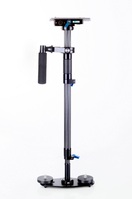
I absolutely love the flowing, beautiful and engaging steadicam (stabilizer) shots often seen in films and music videos. When done properly they can add so much production value to any video production, be it a creative one or even a corporate video. One of the first things I bought then I first got into filmmaking was a Flycam 5000, which was a great start for me. Even though it’s very tired now, in my time using it, I produced a lot great shots with it, that really helped me bring the projects that I was working on to life. Quite recently I decided it’s time to upgrade to something better and very conveniently for me a new version of Flycam just came out, which on paper offered much more for the price I originally paid for 5000. I didn’t want to spend much and at this price there wasn’t anything else that really stood out. I week later I received my new Flycam C5 and made an unboxing video right away, which can be viewed below if you haven’t seen it yet. I went through the features in the video, but the ones that stood out to me again while actually using this stabilizer were: Top plate fine adjustment knobs: These things are so straightforward and so good for precise adjustment. Adjusting side to side and back to front balance is so easy. There are 2 side-to-side fine adjustment knobs on each side, so no matter what hand you are holding you stabilizer with, you can reach the knobs easily. On top of that, you don’t have to undo any safety knobs/screws to adjust the side-to-side balance, unlike all the other stabilizers I’ve used. You would usually have to undo 4 knobs on the bottom to adjust the side-to-side balance; with C5 you just rotate 1 knob and when you are happy, you just leave it as it is, it the plate doesn’t slide or rattle about. Back to front adjustment is also much more straightforward that on any other stabilizers I’ve seen. You only have to undo one knob to loosen the top sliding plate and then rotate the fine adjustment knob to move the plate back and forth. The older/simpler models like Flycam 5000 & Nano and Glidecam Pro series, don’t even have any fine adjustment knobs, you have to adjust the balance by moving the plate with your hands, not great for fine balance adjustment and impossible to do while holding the stabilizer with your other hand to check the balance. The closest thing in terms of comfortable, precise adjustment with similar specs is the Glidecam HD4000, but even with that one you have to undo 8 knobs in total to adjust side to side and back to forth balance and on top of that it also costs almost 3 times more than the C5. Talking about more expensive stabilizers, I’m sure there are probably a lot of higher-end stabilizers that offer such straightforward balance adjustment methods, but they are way too expensive to fit into budget/indie filmmaking bracket that I’m talking about here. At this or similar price there is really nothing out there that offers the features mentioned above, unless I’m missing something. Sliding Plate: This plate is like a tripod plate rather than one of them massive plates found on other stabilizers mentioned above. With these stabilizers people just end up buying extra quick release adapters to avoid unscrewing all 4 or in case of Glidecam HD series 8 side screws/knobs to get the top plate off just to put the camera on and do the same when the want to get it off. This is incredibly annoying and inconvenient. So one of the things that initially impressed on C5, was this cool, sliding, quick release plate; just one knob to undo and it slides out just like a tripod plate. There is a safety pin too, to make sure that it doesn’t fall out, protecting your camera from a potentially painful drop. This plate is a really cool idea, I think it probably was inspired by higher-end stabilizers, because I’ve only seen such plates on higher-end Glidecams and Stedicams which cost at least 10 times more than C5. It’s great that Flycam is catching up higher-end technology and offers such cool features at such a low price. It’s really not a computer science, but simple things that could improve any stabilizer. I don’t know why other companies don’t offer such features on their stabilizers. Maybe it’s a part of protecting their top of the line products, otherwise why would someone pay $$$$/££££ for the features that can be found on an entry-level model. A few other things that stood out to me are: The carbon fiber central post. I’m not sure how much lighter is it than the aluminum post, but it looks quite cool and adds to the overall positive feel. The poll extension knob is also really nice, much more comfortable than one on my Flycam 5000. It’s ratchet too, very good for moving it out of the way once it’s tightened. When assembled and fully extended, the C5 is quite a large stabilizer, capable of handling a camera up to 7.5lb/3.4kg, which means it could handle much larger cameras than just a DSLR, like my 5D, but when dissembled it very neatly fits into a very compact, padded bag that comes with it. This is a big bonus for me, because my stuff usually gets all scratched up in my big suitcase. The bag has a shoulder strap for transportation, but even if I just drop it into the suitcase with my tripods and stands, it’s protected and basically stabilizer will last longer. If I decide to sell it in future, it will hold value better, unlike my Flycam 5000, which is now so tired, I don’t even want to put it on eBay. So is it a perfect stabilizer? Nothing is perfect and of course there are always things that can be improved. I find that the handle is a bit short for my hand and why no foam or rubber padding? It’s simply metal, which I guess was also inspired by handles on high-end stabilizers, which are usually used with swing-arms and vests; there is no need for padding on such stabilizer handles. To be honest, when I’m using the C5 with my arm brace it doesn’t bother me either, but for people who would just hold the stabilizer with their wrist, some padding would be nice, which would also make the handle chunkier and bigger, which would help holding it for a longer period of time. Adding some padding is very simple, even I could do that, but it’s nice to have what you need when you buy something, not mod it afterwards. The only other thing that is a bit annoying is that the holes on the quick release plate are of different sizes, 3 smaller and 2 larger. The larger ones are almost too large for the screws that come with the stabilizer, if you’re not careful when fitting the camera the crew could fall through. This could be very easily fixed if they would include slightly larger washers. For now, to I’ll just to get a larger washer or a screw with a larger head (the spare ones from my Giottos MH621 adapter should be just fine). I could just use one of smaller holes, but I find the second hole from the back is the best for a DSLR setup; it happens to be the larger one. For other cameras it might be different, quite possibly the middle one which is one of the smaller ones.
Below you can see some test footage that I shot with this stabilizer.
I think for a first time it performed really well, but I could achieve better results with some practice. To get the most out of any tool, be it a slider, tripod, dolly or stabilizer, you need to practice. I’ve heard someone say that a good steadicam operator could take a stick and make better shots than someone with a high-end stabilizer who doesn’t how to use it. I have to agree with that. I’m not really good at it myself, but I’m willing to learn, practice and get better. If you’ve never used a stabilizer yourself and about to get one, be it a C5 or any other one, don’t be disappointed if your first try is not great. Experiment with the balancing until you get it right. It initially took me about 15-20 minutes to get the balance I wanted, so don’t assume that you can stick the camera on a stabilizer and magic will happen, when you first get into to it, things might not go your way, but just work on it, get the balance as good as you can and most importantly, practice. Bellow you can see the video I’ve done on balancing a stabilizer and getting the best results out of it. Hope it will be helpful if you are only starting out or want get more out of your stabilizer. Going back to the review. I’m really enjoying my Flycam C5. It looks cool and it feels great too. At this price, I really don’t think there is anything better. Most of the stuff out there is a bit basic and dated. The C5 is probably one of the newest budget stabilizers available and as mentioned above, it seems to be inspired by the higher-end stuff, bringing some cool features to people on a tight budget like myself. Of course it’s not the best stabilizer in the world, but it offers an amazing value/features for money. I highly recommend the C5 to anyone looking to buy their first Stabilizer or upgrading from something like a Flycam 5000 or Nano. I also recommend buying an arm brace. It doesn’t cost much and it helps so much with operation, especially for a longer period of time or with a heavier camera. It ended up to be quite a lengthy review and I hope you stuck with me till the end. Feel free to ask any questions regarding this or any other stabilizer and I’ll do my best to get back to you soon.
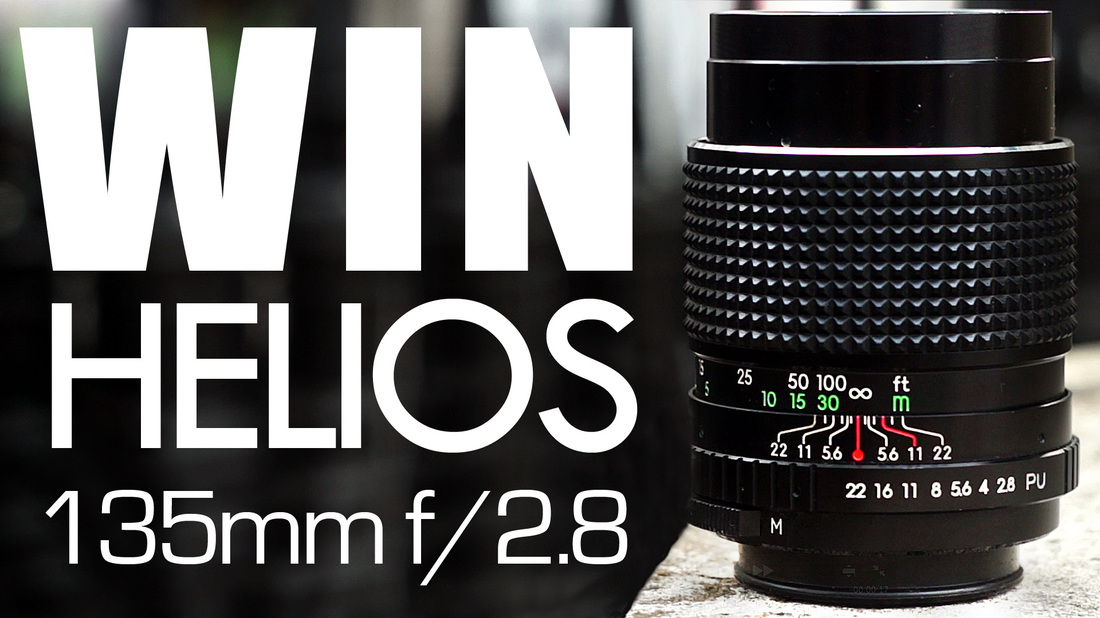
It’s time of a new lens giveaway and as promised this time I’m giving away 4 lenses, so more of you guys will have a chance of winning. The lenses I’m giving away are Helios 58mm f/2 primes. They are great for low light and archiving a very nice, shallow depth of field. I’ve tested these lenses and I was really impressed with the performance. You can check out my test videos on my youtube channel. 3 of the lenses are Helios 44M which are older, more common 9 aperture blade version and 1 of the lenses is Helios 44M-4, which is virtually the same, but slightly newer, 6 aperture blade version. All of the lenses come with both lens caps and are still in great optical condition. A couple have slightly stiff focus rings, which is common for these lenses, but still work fine. I will post these anywhere in the world for free, so don’t let you location stop you from entering; my last lens was won by someone in Algeria. Since I’m giving away 4 lenses rather than 1, I hope that there will be more entries, so I decided to try out the raffle website called rafflecopter.com to help me track all the entries and make things cleaner. Entering is very simple as before, all you need to do is complete 1 of 6 steps below. At first I made 3 mandatory, but then decided that I don't want to restrict people from entering just because they don't have a Tweeter or Facebook account, so yo qualify for 1 entree you only need to complete 1 point, but completing all 6 will give you higher chance of winner. Please note, that the winner will NOT be chosen by the amount of point. The extra points will just give extra entries: 1 point = 1 entree, 2 points = 2 entries , 3 points + 3 entries, etc. To earn yourself extra entries you can also tweet the message shown in the widget below once every day, just make sure that you do it through rafflecopter widget below. Any entries made in any other way will not be entered into competition, only the ones processed through rafflecopter. Good luck to everyone entering and the winners will be announced in 2 weeks time, once the competition is over. As you may know, I don’t have any sponsors and I fund all my giveaways myself. I giveaway what I can and as often as I can. If you like my giveaways and would like to help me fund my future giveaway, please consider donating anything that could go towards new prizes. If you can’t spare anything, you can still help, by spreading the word about www.budgetfilmmaker.co.uk. All your help is greatly appreciated
I’ve tested both of these lenses before, so the individual write-ups and opinions can be found here (for Olympus) and here (for Helios). Someone on the website asked me what was better just considering the image quality Olympus Zuiko 50mm f/1.4 or Helios 44m 58mm f/2, so I decided to do this quick test with my Olympus and the Helios I’ve used in my previous test. I think the results in the video are quite obvious, Olympus performs much better at f/2, which means it’s already slightly stepped down and you are getting more out of it than the Helios, which at f/2 is wide open. To get more out of your lens you generally want to step it down a little bit. It is really hard to judge the sharpness from a video anyway and in the video mode lenses are much more forgiving, so to get a better idea about sharpness I’ve also included some photos. Again with all the compression the video goes through you can’t judge the sharpness that well. So have a looks at some side by side crops below. I think in the video I didn’t used the best Helios photos I actually managed to take during the test. Maybe the focus was just slightly out, which introduced a lot of glow and some chromatic aberration around the highlights. So below you can see these close ups again (click to enlarge). I found that the second badge of Helios test shots was much better than the first and in this one even at f/2 there is very little difference between these 2 lenses. If anything I think Helios produces better results, with lens less chromatic aberration and ghosting around the highlights that can be seen in Olympus crop. Absolutely amazing considering the price of this lens. Both lenses definitely benefit from being stepped down to f/2.8 and you are getting a really nice image from both at this f-stop. In the video test, Olympus still looked better, but the close-ups below are virtually identical and Helios has virtually no chromatic aberration around highlights where Olympus still has some red/pink ghosting around the edges. At f/5.6 I think Helios is sharper, but Olympus performs quite nicely too. I perform the warmer look of Helios too, although there is nothing wrong with Olympus. I think the very crucial thing with these lenses is to get the focus right. The difference between the Helios close-ups that were maybe just a bit out and the ones that were spot on is massive, not only in sharpness levels, but also chromatic aberration and ghosting. I think both of these lenses offer great value for money. Olympus is one of the cheaper 50mm f/1.4 and performs great and Helios is just incredible value for money, being one of the cheapest lenses you can buy, the results it produces are amazing. If you are stuck with your plasticky, slow kit lens, go and get one of these babies. At f/2 it is quite a fast lens and it well be a great lens for your mid to close people shots. At this price you can’t go wrong. If you still can’t be bothered to buy one, then stay tuned, because I will be giving away a few of my Helios lenses very soon. Click to enlarge Both lenses definitely benefit from being stepped down to f/2.8 and you are getting a really nice image from both at this f-stop. In the video test, Olympus still looked better, but the close-ups below are virtually identical and Helios has virtually no chromatic aberration around highlights where Olympus still has some red/pink ghosting around the edges. Click to enlarge At f/5.6 Helios is sharper, but Olympus performs quite nicely too. There isn't much between them at this stage and in video mode you couldn't tell the difference.
Click to enlarge I think the very crucial thing with these lenses is to get the focus right. The difference between the Helios close-ups that were maybe just a bit out and the ones that were spot on is massive, not only in sharpness levels, but also chromatic aberration and ghosting.
I think both of these lenses offer great value for money. Olympus is one of the cheaper 50mm f/1.4 and performs great and Helios is just incredible value for money, being one of the cheapest lenses you can buy, the results it produces are amazing. If you are stuck with your plasticky, slow kit lens, go and get one of these babies. At f/2 it is quite a fast lens and it well be a great lens for your mid to close people shots. At this price you can’t go wrong.
If you still can’t be bothered to buy one, then stay tuned, because I will be giving away a few of my Helios lenses very soon.
Above is a very simple test I’ve done on 3 great 50mm f/1.4 lenses. I often use a Canon EF 50mm f/1.4 and everyone knows that it’s a great lens, although the focusing ring is certainly not the best. A few months I shot a little test video with Nikon 50mm f/1.4 and I really enjoyed using it. The Nikon 50mm performed really well and this lens along with other Nikons is very popular amongst the DSLR/Large-Chip-Camcorder filmmakers. The third lens in this test is the least popular and the cheapest out of 3, the Olympus Zuiko OM 50mm f/1.4. It is also the smallest and probably the lightest lens in this test. The purpose of this test was to determine how well does Olympus stack up against the more (and more expensive) popular alternatives. Below are my own thoughts about the results. You are more than welcome to share your own thoughts and the comments below. The first test was to determine how nice is the bokeh from these 3 lenses. Wide open all 3 lenses have nice, soft bokeh. The Canon, probably has the softest, Olympus is also really good, but I would say Nikon was producing the least round out-of- focus circles. I personally prefer round circles. At f/2.0 Canon and Olympus still managed to produce circle bokeh circles, while Nikon was producing heptagon bokeh, which is still fine, but I just prefer circle bokeh. Pretty much the same goes for f/2.8. Next and much more important test was to determine the sharpness of each lens at different f-stops. In my 200% timeline video crop test, the Olympus really surprised me. At f/1.4 it appeared to have the best sharpness out of 3. It also handled the highlights from the lights at the fruit stand really well, probably even better than the 4 times more expensive Canon. Nikon had the most ghosting. At f/2.0 Nikon has really caught up and actually performed better than Olympus. Canon performed nicely as expected. As I was stepping down the aperture, Nikon kept getting better and probably performed the best at f/2.8. Canon was very close and Olympus stayed behind, although still a great performance for the money. To get the better idea what the sharpness is really like I took some photos with each lens and placed on the timeline at the 400% crop. This gave a much better picture of how each lens really perforce. At f/1.4 all 3 lenses have very similar sharpness, but Canon actually has the most chromatic aberration. At f/2.0 Nikon performed better than the other 2. At f/2.8 Nikon was still slightly ahead of other 2 and I think when stepped down it actually performs the best, which probably explains why Nikons are so popular. Anyone who would buy the Nikon or Olympus, would probably buy them for video work only as there is obviously no auto focusing on these lenses. The difference in image quality is not that different, especially in video mode. Both Olympus and Nikon lenses offer great value for money for video shooters. Both have very nice focusing rings (much better than Canon’s), on-lens aperture adjustment (great for different brand cameras) and they are much cheaper than the Canon (Olympus being the cheapest and Nikon slightly more expensive, but still 3 times cheaper than Canon), so if you are only using your DSLR for video, there is really no point buying Canon EF. The Canon lens is great for photographers, but does not offer such a great value for money for videographers. All 3 lenses really benefit from being stepped down to at least f/2.0. For me Olympus is probably the best wide open, so really a great choice for them low light. My Olympus is not even is such a great shape, there is some dust and spots of fungus inside, which might have affected the performance slightly. I wonder what it would have been like if it was in such a great condition as my Nikon. I have to say Nikon was probably overall the best performer for the money. Conclusion: Canon lens wasn’t mine; Nikon is great, but focuses clockwise unlike my Canon lenses (which is the pain with a follow focus), so I’m keeping the Olympus to be my 50mm f/1.4 for now. I highly recommend this lens for anyone wanting to invest into some fast glass at a bargain price. If you are Nikon person, then Nikon 50mm is a better choice.
Above you can see a quick test I’ve done with this lens while out in a local park. It was really bright and I couldn’t use this lens at wide open aperture, so I think this test footage doesn’t do the justice do to this lens. I really need to test it out in low light next time. At f/2 is should be a great low light performer. I’ve also done some quick tests against the Canon EF 50mm f/1.4, which is a great lens and while Canon produced better results in my test, it wasn’t 10 times better, but it’s 20 times more expensive than Helios, so in my opinion, Helios offers much better value for money than Canon. Helios 44M is one of the first lenses that started my interest in vintage manual photo lenses for video use. It is a very interesting lens, not only it is one of the cheapest lenses you can buy, but it’s also apparently a Zeiss Biotar copy. The lens optics were based on Zeiss formulas, so these lenses are apparently very sharp, considering you get a good copy. Apparently the quality control was quite poor, so optical quality varies. It is possible that the lens I tested against Canon was not the best optically. The lens itself is very well built, it’s fully metal, with a nice, long through focusing ring (about 270 degrees). I have 4 of these lenses and a few have slightly stiff focusing rings, so that is something worth bearing in mind. You can find out a bit more about this lens in a great article I found here. This lens must be the biggest bargain ever. The first Helios 44m I bought, cost me just £3. “Carl Zeiss” quality lens for under £10? That must be the best kept secret in budget filmmaking world, or was I just blinded by “Canon-Only” world around me? If you didn’t know about this lens, now you know, so don’t hesitate even for a second to get one, at £10-£20 what have you got to loose? In the worst-case scenario you can sell it back on eBay. I will be giving away a few of these lenses in my next giveaway, but if you can’t wait, just pick one up and you won’t regret it.  Click to view this item on eBay
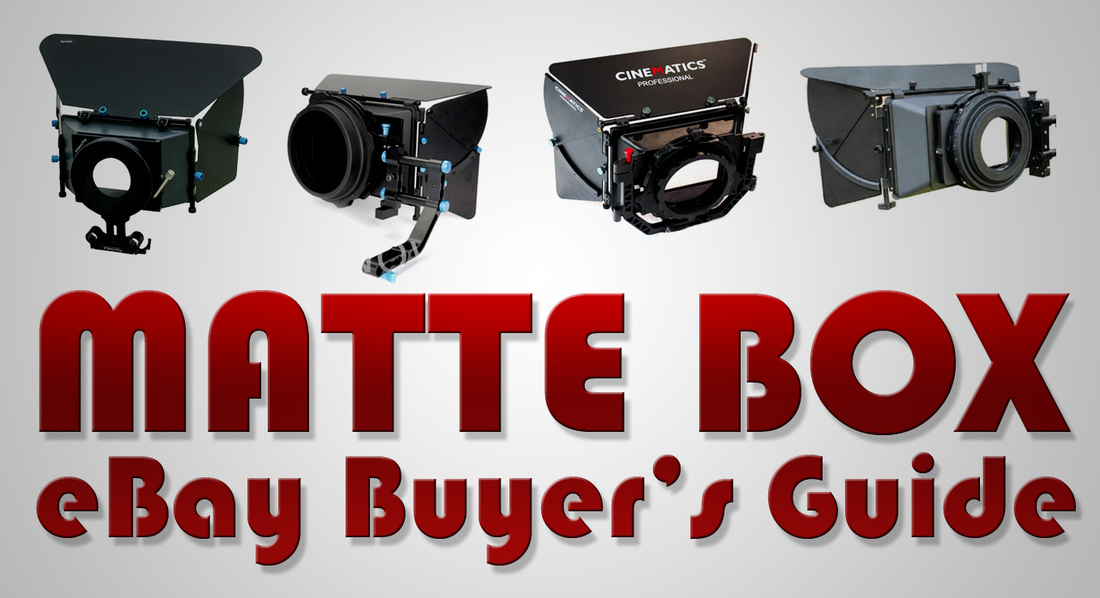
Matte Boxes are very useful accessories for film-making. They can help minimize the any unwanted flares and most have filter holders for 4x4 filters, which are used to enhance the image in many different ways.
A few years back Matte Boxes used to cost a fortune, and there was a very little choice on the budget side. There ware just a few Indian ones, that would cost way too much due to the lack of competition from other brands. The things have changed. Nowadays there is so much to choose from with the prices starting under $20/£15.
I’ve decided it’s time to do a bit of a research and put together a Matte Box Buyer’s Guide with all the best deals on eBay. Below you will see all matte boxes I decided to include, starting from the cheapest ending with the most expensive, rounding up with my personal recommendations and conclusions. I haven’t included every single Matte Box on Ebay, but only the ones that I personally think deserve a place in this guide. Value for money varies, but even the most expensive ones are still great deals if you think about choice and prices even 2 years ago. I decide not to go above $500/£300 mark, because there is so much choice for less.
The cheapest matte box on eBay is sold by delight-digi. You’ll see it all over ebay, but this is the absolute cheapest deal I found. The price is simply incredible, although the matte box is pretty cheap and very basic. It is made out of cheap plastic and doesn’t have any filter holders. The flags are a bit weird and basic too, but they work. I actually used this MB couple of times when shooting with someone else’s camera and I was actually able get rid of some nasty flares that were hitting the lens, so if you are only starting out and don’t have money for a better MB this is well worth the money, it’s just can’t get any cheaper than this. The next cheapest MB I decided to include is sold by pell678. This is a decent looking MB, with decent French flags. Unlike the one above which requires a set of 15mm rods, this MB is fitted directly to the camera lens. This can be a great feature for people who don’t have any rods or/and like to keep their setup minimal. The biggest feature of this matte box, is that is accepts a Cokin P type filters rather than 4x4. Cokin P are much cheaper than 4x4, so it is a very good option for someone on a tight budget. Next MB worth mentioning is Filmcity M-2. This is where we start to get into more traditional look and design. This MB looks like a perfect match for a DSLR. It’s lightweight and has one 4x4 filter holder, unfortunately not rotatable. I think it’s probably the best MB for under $150/£100 though. Next up is Proaim V-11. Now I’ve never been a fan of Proaim and personally don’t have anything from this brand, but this matte box seems to offer a decent amount of features for the money. It has 2 4x4 filter holders that can be rotated, by 180 degrees, but only together, still better than no rotation. On a downside, there is only a top flag. Next is another Proaim MB, but this one is completely different to V-11. The Proaim MB-700 is a proper matte box, with proper French flags, interchangeable masks, 2 filter holders (1 is rotating) and plenty of doughnuts. One of the nice advantages of this MB over others is that it can be used both on 15mm rods and clipped on directly to the front of the lens. Moving on to Chinese stuff now; for under $300/£200 you can now get a high-end style MB from Konovacamera with all the features one might wish for. These include a swing-away arm (really good for a quick lens swap), 2x 360 degree rotating 4x4 and 4x5.65 filter holders (each filter rotates independently), 4 donuts, adjustable flags and a few other accessories. At this price, such package is rather impressive. Stepping just over $300/£200 we are coming back to an Indian MB, probably made my Proaim, this one is called MB-900. This one like the one above has a swing-away arm, flags, 9 donuts (that’s a lot) and 3 filter holders (2 fixed 4x5.65 & 1 rotating 4x4), flags. This is pretty much everything one could wish for. My only complaint is that one 1 filter holder is rotating, but for a lot of people that might not be a problem at all. This MB one of a few that can be used with bigger cine size lenses (lenses with front element up to 105mm) Next up is a Trusmt D100MB2. This is a matte box that I bought myself some time ago. This is a one very cool MB, especially the CF version with Carbon Fiber flags. There is also a cheaper AL version with standard aluminum flags. Like some other MBs above it has a swing away arm and 2x 360 degree independently rotating 4x4 filter holders and a set of 4 donuts. The built quality is really good and at the time when I bought it, it offered absolutely the best value for money. But very recent addition of MBs like the one from Konovacamera the Trusmt MB doesn’t seem to offer such a great value. If Konovacamera MB is as good quality as Trusmt, then there is really not much that can justify the price difference. However if you don’t want to risk and just get a quality MB for under $500/£300, then the D100BM2-CF could be a great choice for you. For virtually the same price as Trusmt you could get the Cinematics MB. This a very cool looking MB with most of the features found in Trusmt D100MB2, except the CF flags and only it only has 1 rotating filter holder (the other is fixed). But it has it’s own interesting features. The first interesting feature of this MB is that it has a mount for bottom flag (I think it even comes with an extra flag); don’t know if it is a useful feature, but an interesting one. Also, the swing-away arm design is quite unusual but actually is really cool and I’m not sure why it’s not found in other MBs. Basically with all standard swing-away arms the arm is fixed on one side only, so the other side (usually the left one) is not fixed to anything, which can result in some unwanted movement when camera is moved with a lot of force. With Cinematics MB, the swing-away arm is fixed on one side, but locked on the other side, so there is no chance of any movement when the MB is locked. Also unlike the standard swing-away arms which hold all the weight and pressure on one arm, this one is supported on both sides, so there is much less chance that such arm will break. I think it is a great feature and it certainly stands out. It is really difficult to recommend just one matte box, because like with the other gear it is all about your budget. The ones that stand out to me include the cheapest one sold by delight-digi, the price is just crazy and if you are just starting out and are on a very low budget you can still afford one of this and start to get familiar with the use of a matte box. If you have a bit more money, then the Filmcity M-2 is a great little MB. The other MB that really stands to me is the one by konovacamera and identical ones sold by other sellers. These MBs offer a very good value for money and have all the features one might wish for. I hope this guide was useful to you and will help you save some money on your gear.
|